

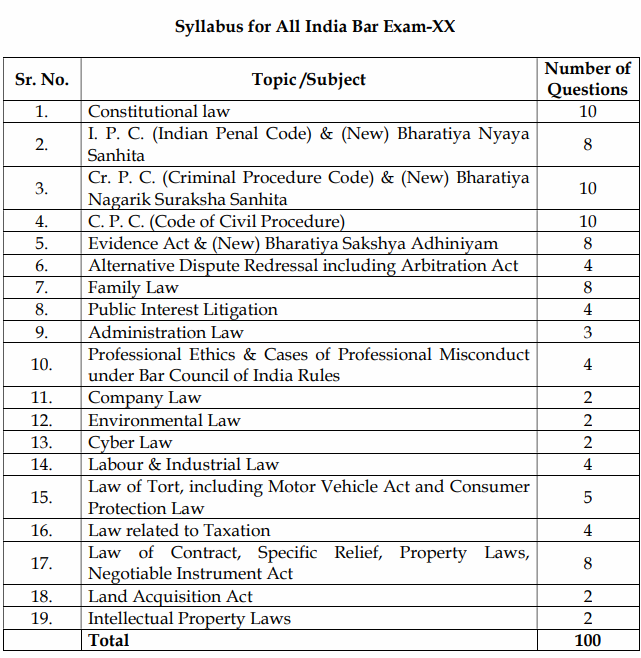
1. Understand the syllabus and carry the Required Bare Acts without Short Notes and Dont forgot to carry the hall ticket
Table of Contents
2.BE CAUTIOUS WHILE SHADING YOUR ROLLNUMBER AND OMR SHEETS BCI DESIGNED THE OMR SHEETS UNIQUELY FOR EACH STUDENTS
3. Crack by Smartly following below steps
Know How to Use the Bare acts
- Identify the area of Question, from which acts
- Search and find the Question in bare acts,
- It can be done simply by searching from Chapters in Index OF BARE ACTS
- Put the BARE ACT Book In Order as Below image in two Types In Exam Hall to avoiding confusion and save time and find easily
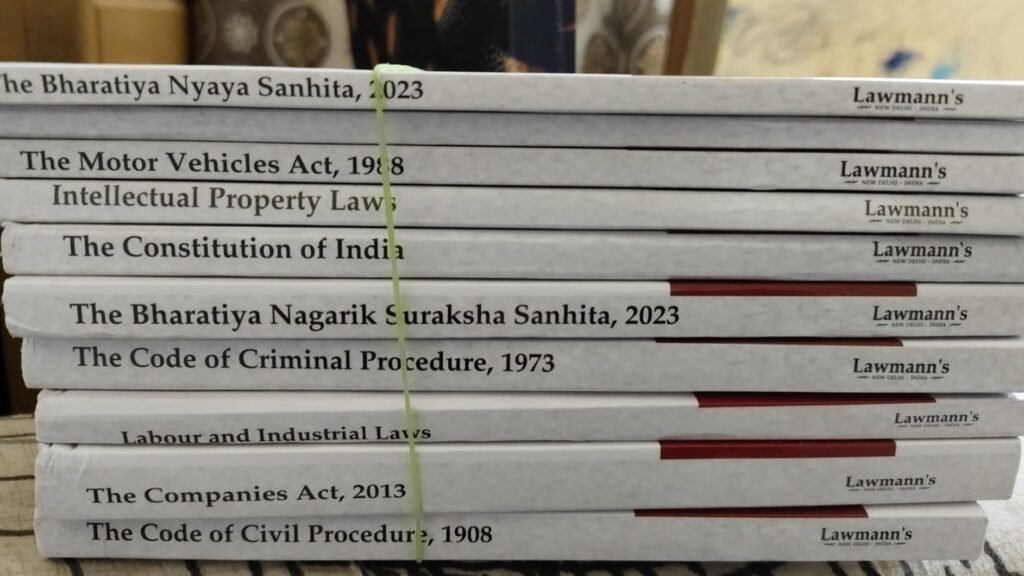
3.1 Book have Acts name in side can be kept like thi save your time
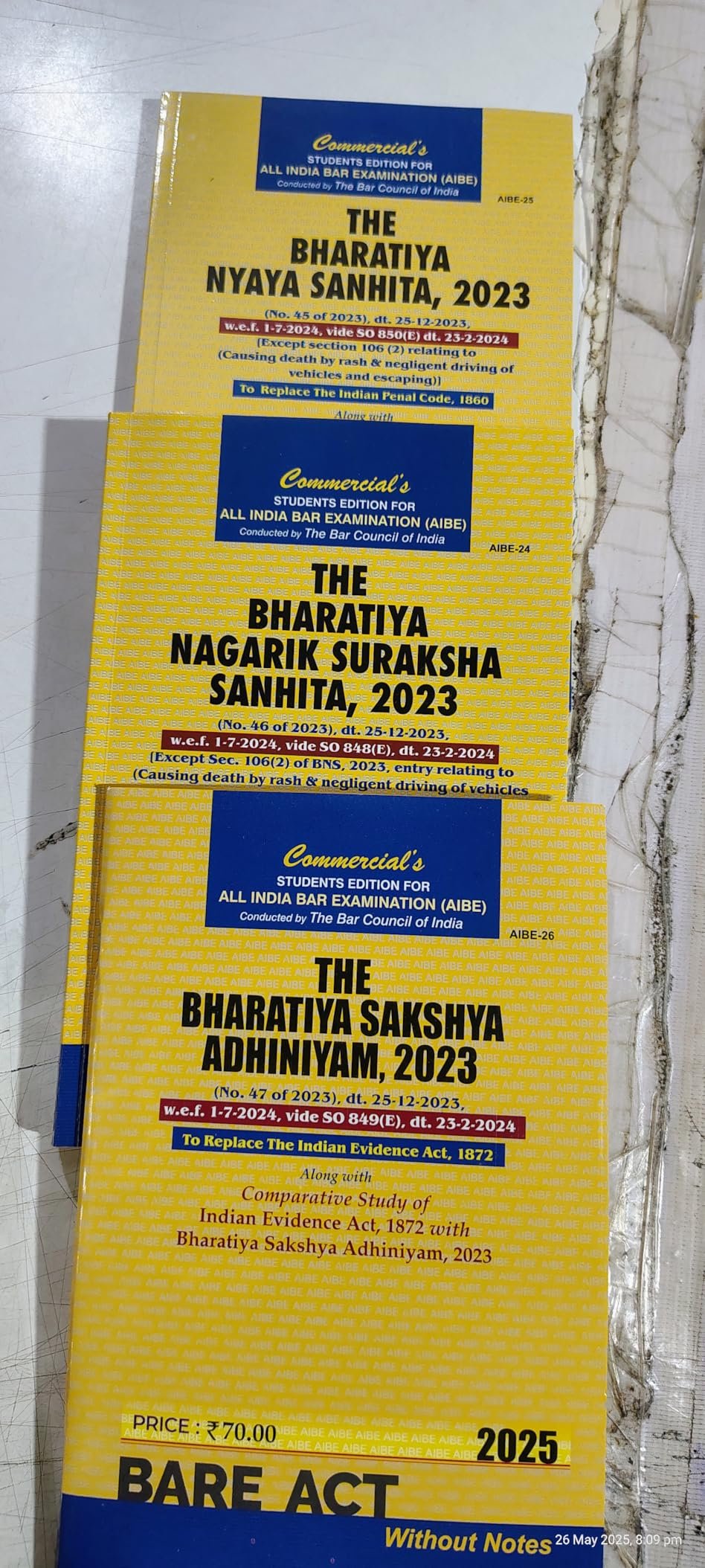
3.2 Bare Acts in short size and No act names in Side of Books can be kept like these can easily find the Acts or in top left corner using a permanent black marker for reference Write the Name of the Act as your convinience
4. Mark the Unanswered Question In Question Paper for reference in small based on your convenience for smarter Identification in last time Hurry
5. Go with the High Number of Questions Acts, Based on Syllabus
- Constitution of India Start with the Constitution and find the questions from the Constitution continuously. Finish all the Constitution questions first. In case any answer takes more than 1 minute, skip it and move to the next one, and reserve the time-consuming questions for the last minutes. Along with Constitution-related questions, Public Interest Litigation (PIL) and Administrative Tribunal Laws can also be answered, as most PIL questions are similar and repeatedly asked in previous year examinations.
- Indian Evidence Act & Bharatiya Sakshya Adhiniyam Similarly, identify and answer questions from the Indian Evidence Act and the Bhartiya Sakshya Adhiniyam. Since the Bhartiya Sakshya Adhiniyam contains only 170 sections, it can be completed efficiently by following the same approach
- Indian Penal Code (IPC) / Bharatiya Nyaya Sanhita (BNS) Similarly, for the Indian Penal Code (IPC) or the Bharatiya Nyaya Sanhita (BNS), search and categorize questions based on the area of offence as organized in the chapters of the Bare Act. This helps you systematically cover each category of offences and quickly identify repeated or predictable question patterns.
- Criminal Procedure Code (CrPC) / Bharatiya Nagarik Suraksha Sanhita (BNSS) Similarly, for the Criminal Procedure Code (CrPC) or the Bharatiya Nagarik Suraksha Sanhita (BNSS), review and solve questions chapter-wise based on procedural stages and areas of criminal process. This structured approach helps in quickly identifying frequently tested provisions and improves accuracy by aligning preparation with the natural flow of the Bare Act.
- Civil Procedure Code (CPC), 1908 Similarly, for the Civil Procedure Code, 1908 (CPC), analyze and attempt questions systematically by following the structure of the Bare Act—covering each stage of civil proceedings such as institution of suits, pleadings, appearance, trial, judgment, and execution. This chapter-wise, process-oriented approach helps in identifying repetitive question patterns and ensures comprehensive coverage of all procedural areas.
- Contract Law, Specific Relief Act, Transfer of Property Act, Land Acquisition Act Continue the same approach after completing the Civil Procedure Code. Move on to the Law of Contracts, the Specific Relief Act, the Transfer of Property Act, and the Land Acquisition Act. Analyze and answer questions systematically by following the structure of each Bare Act. Cover the chapters in sequence, focus on frequently tested provisions, and identify recurring patterns from previous year questions to improve speed and accuracy.
- Family Laws (Hindu & Muslim Law) Continue with Family Laws using the same structured approach. In Hindu Law, focus on key areas such as Hindu Marraige,succession agnates, cognates, sapinda relationships, guardianship, Hindu Maintenance, and the year of enactment of each major statute. In Muslim Law, prioritize frequently repeated topics such as maintenance, modes of divorce for men and women,muslin women divorce protection acts,muslim dissolution,women protection rights and questions related to the iddat (waiting period). These areas are regularly asked in previous year examinations, so revising them systematically will help you answer quickly and accurately.
- Alternate Dispute Resolution (ADR) & Advocates Act Continue with Alternate Dispute Resolution (ADR) and professional ethics laws such as the Advocates Act. These topics are generally straightforward and can be answered quickly. Together, they usually cover around 8 marks, making them scoring areas that should be revised thoroughly and efficiently.
- Intellectual Property Laws(Trademark, Copyright, Patents Act), Cyber Law & Environmental Law Continue with Intellectual Property Laws, Cyber Law (IT Act 2000) , and Environmental Law(The environmental protrction , Air pollution, water pollution, NGT Act 2010 ), as these subjects are comparatively concise and can be prepared together. The questions from these areas are often direct, concept-based, and repeatedly asked, making them easy to answer efficiently in the examination.
- Labour laws and Company Law Act In continue Labour law questions and Company law questions can be jointly answered due to both are under same areas
- Income Tax Act Taxation Law questions are generally direct and based on core principles.Basic concepts of Income Tax (assessee, assessment year, previous year, exemptions) GST framework (supply, registration, levy, input tax credit) Important definitions and sections frequently asked in AIBE Since Taxation Law is not vast in the exam, it can be revised quickly and contributes easy marks.
DOWNLOAD THE ALL AIBE PREVIOUS YEAR QUESTION PAPERS WITHS ANSWERS EASILY
Rewise 5 to 6 Previous Question Papers Is enough for Exam
Click the links to directly download the Questions and Answer
AIBE-QUESTION-PAPER-19-ANSWER-KEY ALL SETS
AIBE-QUESTION-PAPER-19-SET-A-ENGLISH
AIBE-QUESTION-PAPER-19-SET-A-HINDI
AIBE-QUESTION-PAPER-19-SET-B-ENGLISH
AIBE-QUESTION-PAPER-19-SET-B-HINDI
AIBE-QUESTION-PAPER-19-SET-C-ENGLISH
AIBE-QUESTION-PAPER-19-SET-C-HINDI
AIBE-QUESTION-PAPER-19-SET-D-ENGLISH
AIBE-QUESTION-PAPER-19-SET-D-HINDI
AIBE-QUESTION-PAPER-18-SET-B-ENGLISH
AIBE-QUESTION-PAPER-18-SET-C-ENGLISH-HINDI
AIBE-QUESTION-PAPER-18-SET-D-ENGLISH
AIBE-QUESTION-PAPER-18-ENGLISH-AND-GUJARATI
AIBE-QUESTION-PAPER-17-ANSWER-KEY
AIBE-QUESTION-PAPER-17-SET-C-ENGLISH
AIBE-QUESTION-PAPER-17-SET-C-HINDI
AIBE-QUESTION-PAPER-16-ANSWER-KEY
AIBE-QUESTION-PAPER-16-ENGLISH-SET-A
AIBE-QUESTION-PAPER-16-HINDI-SET-B
AIBE-QUESTION-PAPER-16-ENGLISH-AND-GUJARATI
AIBE-QUESTION-PAPER-15-SET-A
AIBE-QUESTION-PAPER-15-SET-A-ANSWER-KEY
AIBE-QUESTION-PAPER-15-SET-B
AIBE-QUESTION-PAPER-15-SET-B-ANSWER-KEY
AIBE-QUESTION-PAPER-15-SET-C
AIBE-QUESTION-PAPER-15-SET-C-ANSWER-KEY
AIBE-QUESTION-PAPER-15-SET-D
AIBE-QUESTION-PAPER-15-SET-D-ANSWER-KEY
AIBE-QUESTION-PAPER-15-SET-D-HINDI
AIBE-QUESTION-PAPER-14-ANSWER-KEY
AIBE-QUESTION-PAPER-14-ENGLISH-SET-A
AIBE-QUESTION-PAPER-14-SET-A
AIBE-QUESTION-PAPER-14-SET-A-ANSWER-KEY
AIBE-QUESTION-PAPER-14-SET-B-ENGLISH-GUJARATI
AIBE-QUESTION-PAPER-13
AIBE-QUESTION-PAPER-13-SET-D-ENGLISH-GUJARATI
AIBE-QUESTION-PAPER-12
AIBE-QUESTION-PAPER-12-ENGLISH-SET-A
AIBE-QUESTION-PAPER-12-SET-A-ENGLISH-GUJARATI
AIBE-QUESTION-PAPER-11
AIBE-QUESTION-PAPER-11-ENGLISH-SET-A
AIBE-QUESTION-PAPER-11-GUJARATI
AIBE-QUESTION-PAPER-10
AIBE-QUESTION-PAPER-10-HINDI-SET-A
AIBE-QUESTION-PAPER-9
AIBE-QUESTION-PAPER-9-ENGLISH-SET-A
AIBE-QUESTION-PAPER-8
AIBE-QUESTION-PAPER-8-ENGLISH-SET-A
AIBE-QUESTION-PAPER-7
AIBE-QUESTION-PAPER-7-ENGLISH-SET-A
AIBE-QUESTION-PAPER-6
AIBE-QUESTION-PAPER-6-ANSWER-KEY
AIBE-QUESTION-PAPER-5
AIBE-QUESTION-PAPER-5-ANSWER-KEY
AIBE-QUESTION-PAPER-4
AIBE-QUESTION-PAPER-4-ANSWER-KEY