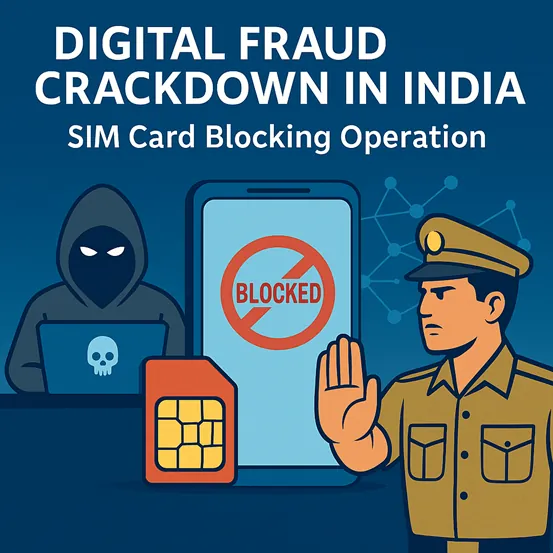

Indian telecommunication department (DOT) major push to strengthen India’s Cyber ecosystem, the (DoT) has begun an unprecedented crackdown on fraudulent mobile connections, aiming to curb digital financial scams linked to fake SIM cards and spoofed identities.
The move comes amid a surge in online financial frauds where criminals exploit weak KYC processes to obtain multiple SIM cards for illegal OTP interceptions and SIM-swap attacks. According to the Business Standard, nearly 4 million SIM cards have been deactivated after being flagged under the government’s AI-based “Financial Risk Indicator” (FRI) system.
Alongside this, the DoT introduced strict new SIM card sale regulations, banning unregistered dealers and bulk SIM issuance’s.
The investigation revealed that fraudsters were using bulk-issued SIMs to execute scams involving fake investment offers, phishing, and impersonation of bank officials. These numbers enabled the interception of OTPs used for UPI and net-banking transactions. The AI tool exposed clusters of numbers activated under identical KYC credentials or suspicious device IMEIs. This initiative also signals the beginning of a broader shift — where technology and regulation work hand in hand to safeguard consumer trust and national cyber integrity.
Legal Interpretation in Tamil
இந்திய அரசு மோசடி சிம் கார்டுகளின் பயன்பாட்டைத் தடுக்க கடுமையான நடவடிக்கை எடுத்துள்ளது. தொலைத்தொடர்பு துறை (DoT) “நிதி ஆபத்து குறியீட்டு அமைப்பு” (FRI) மூலம் சந்தேக எண்களை கண்டறிந்து நிரந்தரமாக நீக்கியது. இதனால் கட்டாய அடையாள உறுதி (Verified KYC) இல்லாமல் சிம் விற்பனை செய்யும் முகவர்கள் கருப்புப் பட்டியலில் சேர்க்கப்பட்டனர்.
இந்த நடவடிக்கை மூலம் மக்களின் நிதி பாதுகாப்பு மற்றும் மின்னணு அடையாள அமைப்பின் நம்பகத்தன்மை மேம்படும் என்று அரசு நம்புகிறது. இதுவே டிஜிட்டல் மோசடிகளுக்கு எதிரான புதிய சட்ட அடித்தளமாக அமைந்துள்ளது.